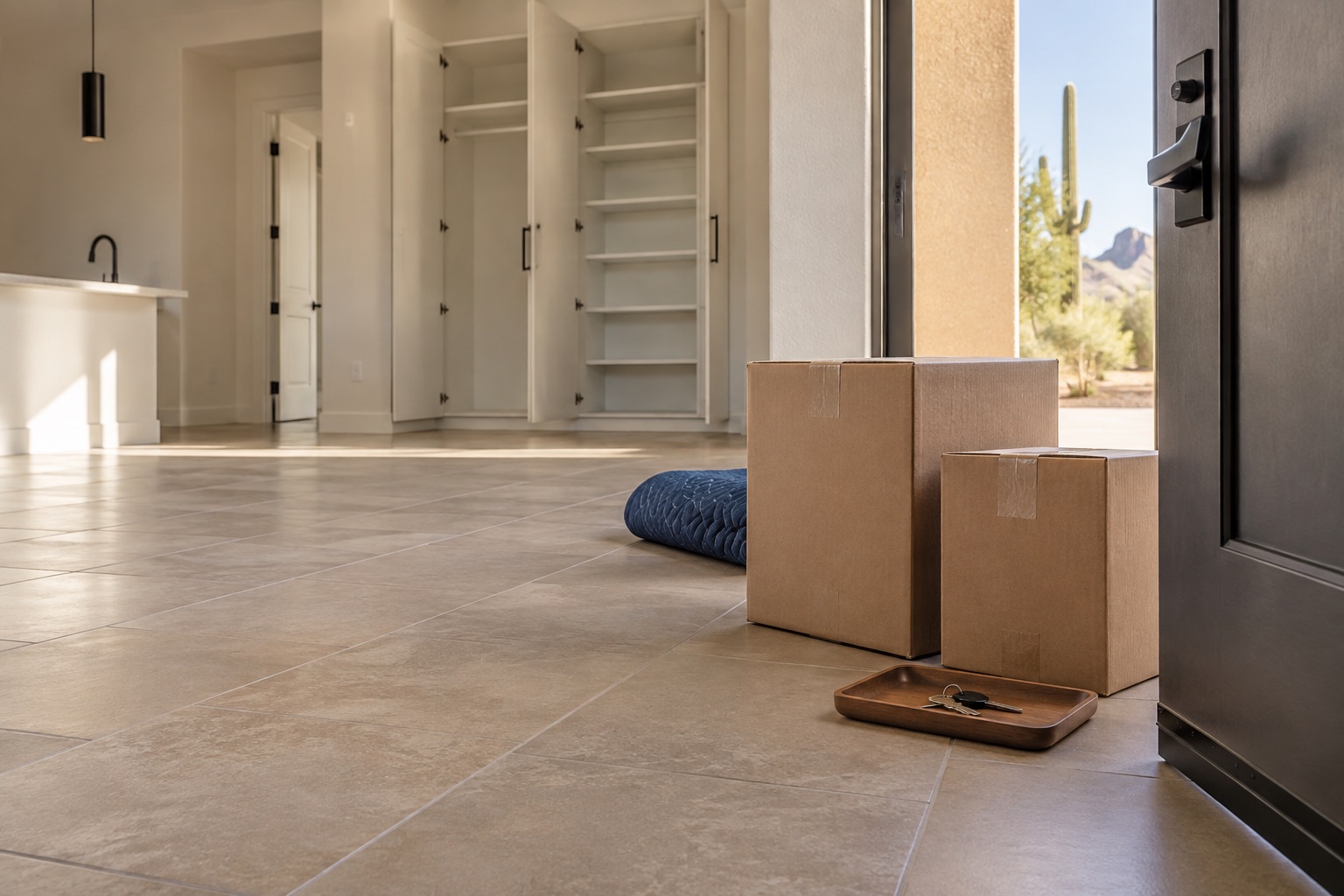
After a Phoenix dust storm, wait until conditions are safe, then work indoors from higher surfaces down to floors. Capture settled dust with a suitable cloth or vacuum attachment instead of spreading it through the room. Prioritize entryways, accessible ledges and the rooms your household uses most.
Start after the weather has passed
The National Weather Service identifies June 15 through September 30 as the official monsoon season. Dust cleanup can still be relevant outside those dates, so plan around actual conditions rather than the calendar. Follow local weather alerts and postpone outdoor tasks when conditions are unsafe. See the National Weather Service’s Phoenix monsoon guidance.
This checklist is for ordinary settled household dust. Water intrusion, damaged wiring, unstable debris or contamination requires a different response. Do not begin a routine clean where storm damage has made access unsafe.
Step 1: contain dust near the entrance
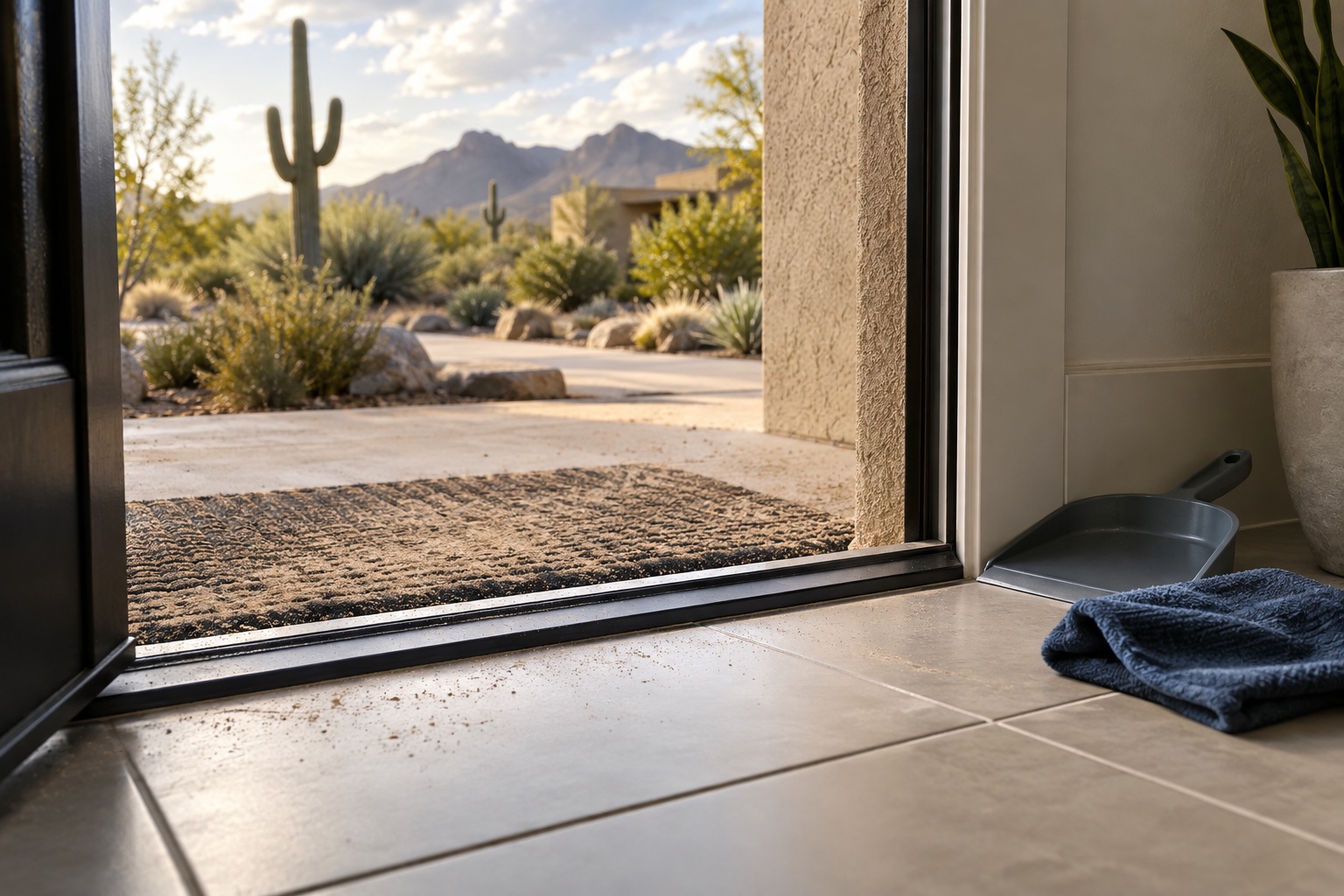
Start with the places where shoes, bags and pets bring dirt inside. Remove loose grit from mats according to their care labels, clean the hard floor beneath them, and keep a place for dusty footwear. Take washable items to the laundry without shaking them through the living room.
Check accessible door thresholds and window ledges. If a gap or damaged seal keeps admitting dust, cleaning alone will not address the source; arrange the appropriate repair. Keep track of which entry points need the most frequent attention.
Step 2: clean higher surfaces before floors
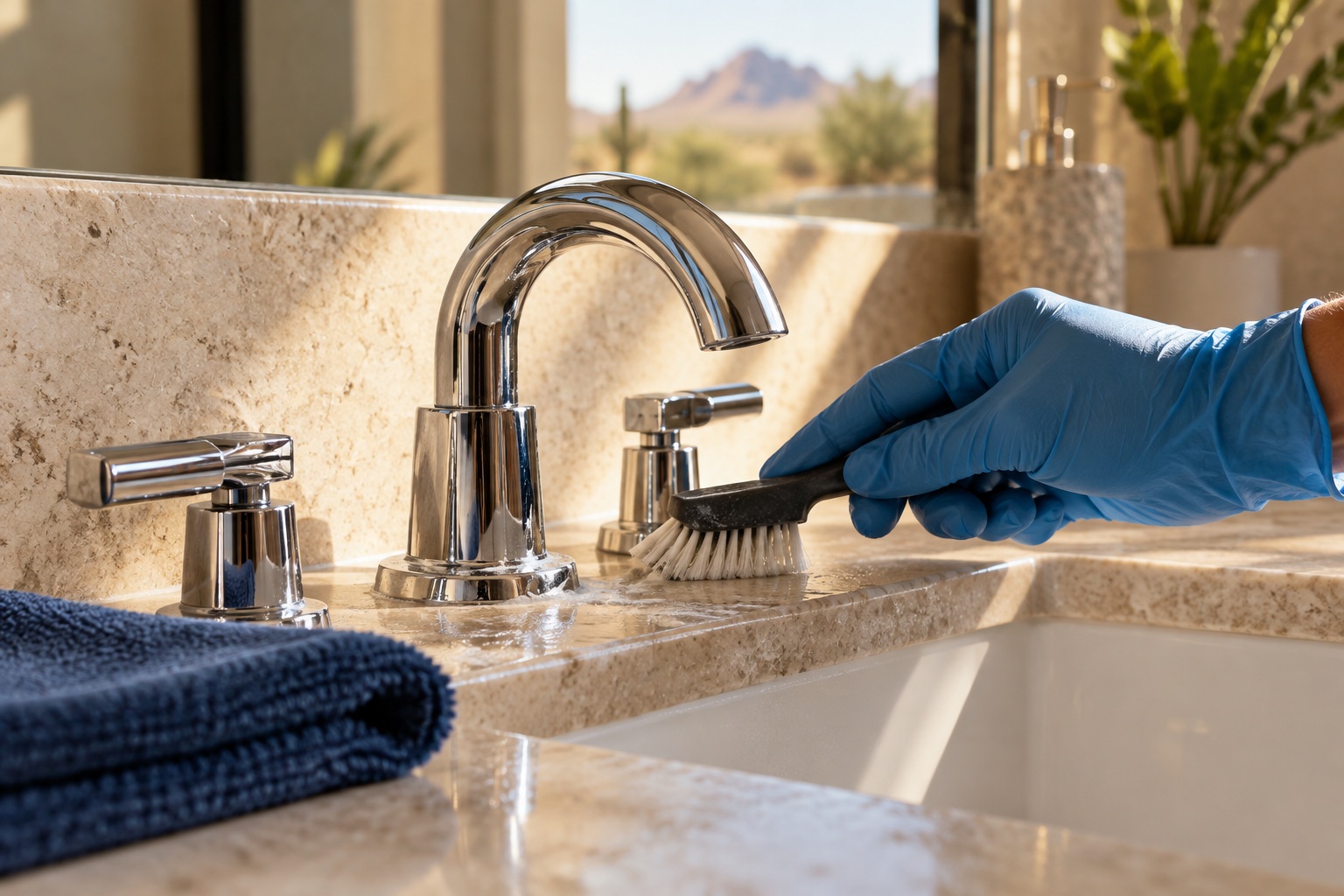
Use a clean cloth and a method suited to the surface. Work through reachable shelves, furniture tops and ledges before returning to lower surfaces. Change dirty cloths rather than wiping the same dust across several rooms. Avoid spraying cleaner directly into electronics or openings.
Check product and material instructions before damp-wiping wood, stone or delicate finishes. The Natural Stone Institute recommends appropriate neutral cleaners for natural stone; vinegar is not a universal cleaner for every surface. Leave high or difficult-to-reach areas for an appropriately equipped professional.
Step 3: finish soft furnishings and floors
Use the vacuum attachments and settings appropriate for the upholstery or floor. Follow textile care labels, and avoid soaking materials that are not designed for wet cleaning. On hard flooring, remove loose grit before using a damp method approved for that floor.
Mop in sections with a clean pad or fresh water as needed. Pay attention to the route from the entrance to the kitchen and living spaces. Let the floor dry before returning rugs, and keep traffic off wet areas. A surface can still be damaged by the wrong product even when the dirt looks ordinary.
Keep the next cleanup manageable
Inspect the main entry route regularly, deal with small deposits before they spread, and use a simple room-by-room checklist. Check HVAC filters according to the system manufacturer’s schedule and conditions; duct work and HVAC servicing are separate from routine home cleaning.
If most of the home is manageable, recurring cleaning may suit the upkeep. For accumulated detail work, discuss deep cleaning. For occasional help after dust has settled, ask about a one-time clean. Share your priorities and ZIP code through Book Now; the Phoenix service page explains local options.
Frequently asked questions
Should I mop before vacuuming dusty floors?
Remove loose grit first with a method suitable for the floor, then damp-clean if the floor manufacturer permits it. This helps avoid dragging gritty debris across the finish.
Does a dust cleanup include air ducts?
Routine home cleaning does not automatically include ducts or HVAC servicing. Discuss those needs with an appropriate specialist and confirm the house-cleaning scope separately.
Do I need to disinfect every dusty surface?
Dust removal and disinfection are different tasks. Use a product appropriate for the surface, and follow its label if disinfection is needed. Do not mix cleaning products.